
You're halfway through a morning round, someone needs washing, dressing and breakfast, and the next call bell is already ringing. It's in those rushed, ordinary moments that respect and dignity in care are either protected or lost. You don't need grand gestures. You need small, repeatable behaviours that the person in front of you can feel.
Table of Contents
- What Respect and Dignity in Care Actually Mean
- The Legal and Ethical Duties Behind Dignity
- Everyday Behaviours That Show Respect
- How to Protect Privacy and Dignity During Personal Care
- Handling Dilemmas When Choice Meets Safety
- Common Pitfalls That Quietly Erode Dignity
- Prove Respect and Dignity Skills on Shift and in Training
What Respect and Dignity in Care Actually Mean
Say you're supporting Mrs Patel in her room. You knock, wait for an answer, use her preferred name and explain, "I'd like to help you wash your face first, is that alright?" You touch nothing until she agrees. Across the room, a colleague shouts through an open door to ask if Mrs Patel has had her pad changed yet.
Both carers mean well. Only the first protects her sense of worth.
Respect means treating someone as an equal whose views count. Dignity means protecting their privacy, control, choices and self-image while you care for them. The difference matters because you can be polite and still expose someone, or you can keep someone covered and still ignore everything they say.
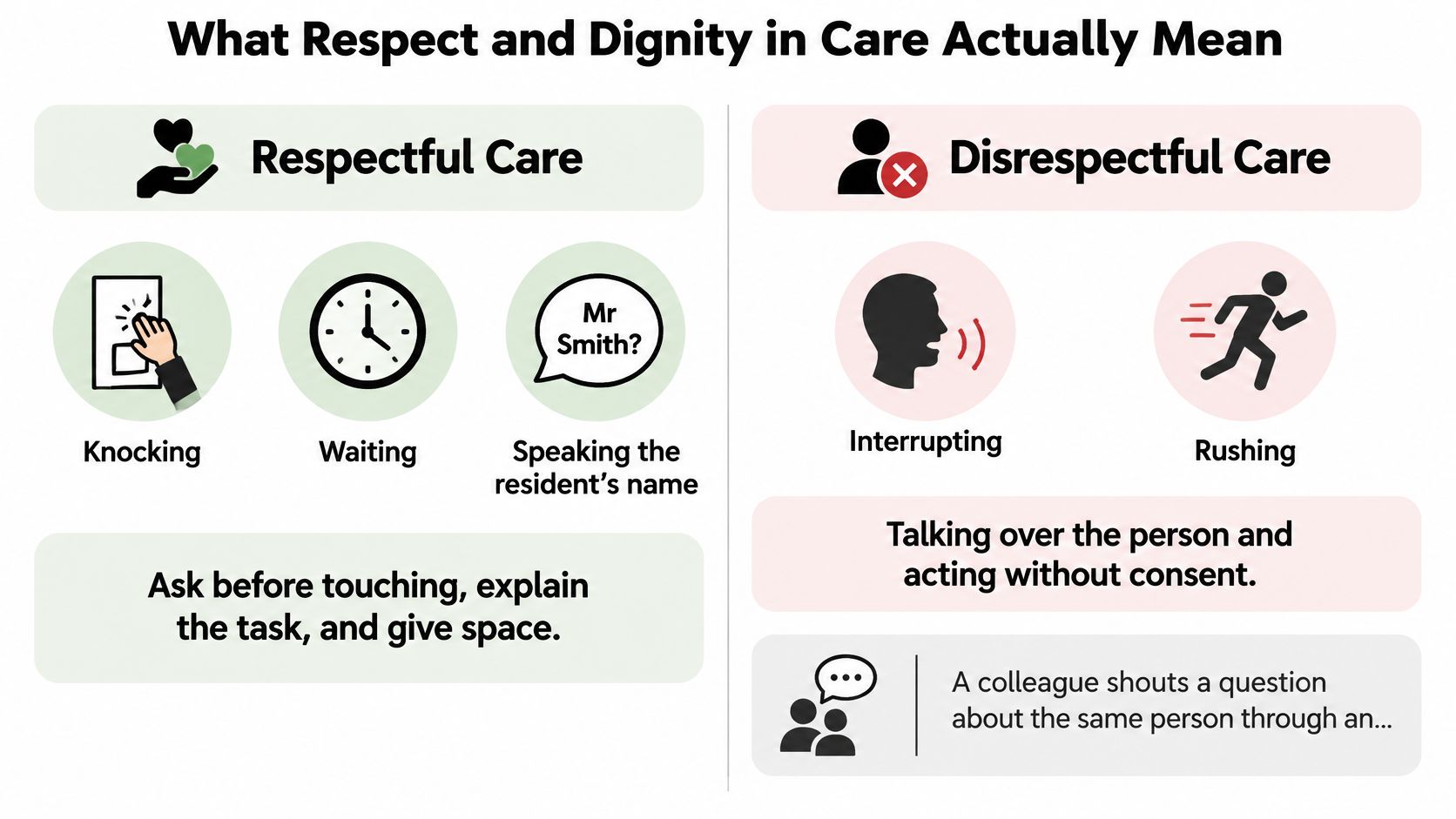
Respect Compared With Dignity in Daily Care
| Element | Respect | Dignity | Everyday example |
|---|---|---|---|
| Core question | Am I treating this person as an equal? | Am I protecting their worth and control? | Asking before assuming |
| Main behaviours | Listening, valuing views, using preferred names | Privacy, choice, appropriate covering, unhurried pacing | Knocking and waiting before entering |
| Typical failure | Talking over or dismissing someone | Exposing someone during personal care | Discussing a resident in the corridor |
| Who judges it | The person and their family | The person, especially on control over routine | Feedback from people using the service |
| Link to the other | Respect without privacy can still humiliate | Dignity without warmth can feel clinical | Both needed in every task |
Notice who judges the result. It isn't you, and it isn't your intention. If Mrs Patel feels talked about rather than talked to, her experience tells you the care fell short, even when the wash was done well.
Think of your last shift. Name one thing you did that showed respect, such as waiting for a full answer, and one thing that protected dignity, such as covering someone properly. That habit of naming both keeps the two ideas practical.
Dignity is not what you intend; it is what the person experiences.
The Legal and Ethical Duties Behind Dignity
Dignity isn't a courtesy you add when you have time. It's a legal duty that sits behind almost every task you'll do, from helping someone dress to deciding who can be in the room during a conversation.
Providers face Care Quality Commission enforcement when standards aren't met. Individual workers face employer discipline, and registered professionals can face referral to their regulator. Knowing which framework says what helps you explain your actions clearly when a senior, an inspector or a family member asks why you did something a certain way.
UK Frameworks That Require Dignity and Respect
| Framework | What it requires | What it means for a carer |
|---|---|---|
| Health and Social Care Act 2008 (Regulated Activities) Regulations 2014, Regulation 10 | Dignity and respect, including privacy and independence | Every task must protect privacy and autonomy, not only finish the job |
| Health and Social Care Act 2008 (Regulated Activities) Regulations 2014, Regulation 9 | Person-centred care that reflects individual needs | Follow the care plan and record changes in preferences |
| Human Rights Act 1998, Articles 3 and 8 | No inhuman or degrading treatment; respect for private and family life | Exposure, neglect or unnecessary restriction can breach these rights |
| Care Act 2014, section 1 | Wellbeing includes personal dignity and respectful treatment | Assessments and support plans must treat dignity as part of wellbeing |
| Mental Capacity Act 2005 | Presume capacity; best-interests decisions must weigh the person's wishes | Support the person's own decisions before acting for them |
| NHS Constitution for England | Respect, dignity and compassion central to how people are treated | Sets the benchmark that NHS organisations and staff are held to |
Regulation 10 is the one you'll hear most often at work. It requires people to be treated with dignity and respect, including privacy and independence. Regulation 9 sits alongside it and requires person-centred care, so a routine that works for the service but ignores the person's needs doesn't meet the standard either.
The Human Rights Act 1998 sets the outer limit. Article 3 bars inhuman or degrading treatment, and Article 8 protects private and family life. Leaving someone exposed, ignoring repeated calls for the toilet, or sharing private information without a reason can move a poor practice issue into a rights issue.
Section 1 of the Care Act 2014 lists personal dignity, including respectful treatment, as part of wellbeing. The Mental Capacity Act 2005 adds a different protection. You must presume the person has capacity, support them to decide, and, if a best-interests decision is needed, weigh their wishes rather than only what's easiest or safest.
The NHS Constitution for England states that respect, dignity, compassion and care should be central to how patients, families, carers and staff are treated, and it defines that in practical terms. Every person should be valued as an individual, their aspirations, priorities, needs, abilities and limits should be understood, and what they say should be taken seriously.
That Constitution binds NHS bodies and staff directly. If you work in social care, treat it as a clear benchmark rather than your direct legal duty, since your direct duties come from the regulations and Acts in the table. Our guide to health and social care legislation sets those duties out in one place for reference.
Everyday Behaviours That Show Respect
A person may receive help with a task and still feel ignored if nobody speaks to them or gives them time to answer. Respect is visible in what you do and in how the person experiences it. Check your practice across two areas: arriving and communicating, and supporting choice while protecting the person's space.
Arriving and Communicating
- Introduce yourself: Say your name and role, ask permission to come in, and explain why you are there. Knowing who has arrived can help the person feel more at ease and understand what is being asked of them.
- Use the person's preferred name and communication method: Ask how they want to be addressed and what helps them understand. Face someone who lip-reads, use short sentences if helpful, and allow time for an answer.
- Speak to the person first: Address them directly before speaking with family or colleagues. Check what they have understood, rather than letting someone else speak for them.
Clear communication in health and social care supports all five habits. A choice only counts if the person can understand the options and has time to respond.
Choosing and Protecting the Space
- Offer two genuine options: Ask, “Would you like the blue cardigan or the grey jumper?” Then wait for an answer. If the person refuses, respond calmly, explain any relevant consequence, and offer to return later when it is safe to do so.
- Guard the environment: Knock before entering, close doors and curtains where appropriate, and keep glasses, hearing aids and the call bell within reach. Avoid discussing personal matters in corridors or shared lounges, where others may hear.
Quick check: Could you explain each action to the person in front of their family without causing embarrassment? If not, change how you are handling it.
The word to watch in feedback is “always”. The 2024 NHS Adult Inpatient Survey gathered responses from 62,444 adults who had stayed overnight in hospital in England. 82% said they were always treated with respect and dignity, while 60% said they were always able to discuss their worries and fears with hospital staff.
These figures describe hospital inpatients, not social care. They still underline a practical point: respectful moments matter, but the person's experience depends on whether they feel able to raise a worry when it occurs.
How to Protect Privacy and Dignity During Personal Care
A task can be completed in ways that expose the person far more than necessary. Personal care is where dignity is most at risk, because you're asking someone to accept help with washing, toileting and dressing that they'd normally do alone.
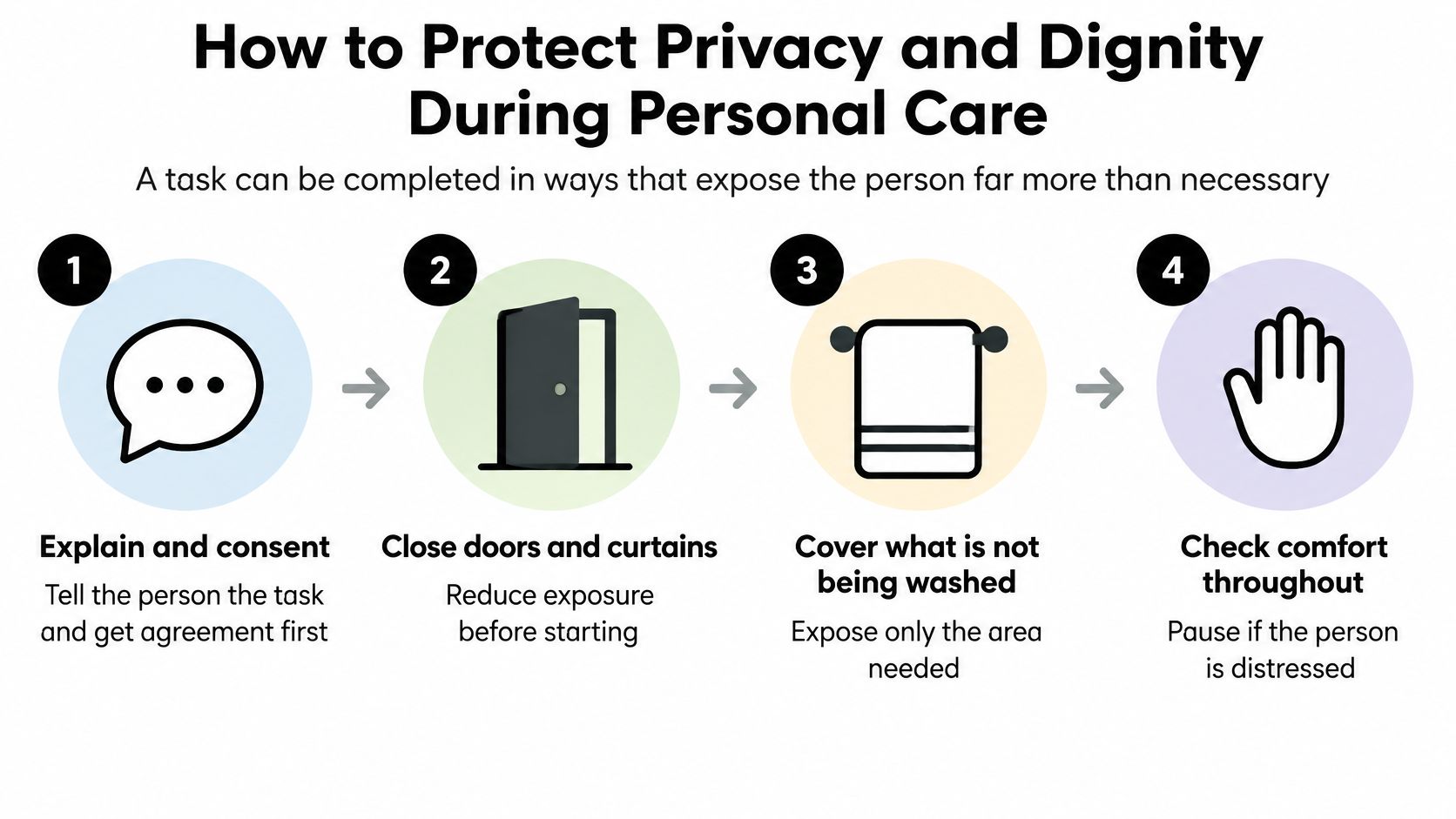
A Ten Step Personal Care Routine
- Explain and get consent: Say what you're going to do and why, and wait for agreement before you start. Consent isn't a one-off signature, so check again as the task changes.
- Check the care plan: Look for preferences about carer gender, cultural or religious needs, products and routines. Following a recorded preference spares the person from having to ask again.
- Gather everything first: Collect towels, washcloths, clothing, gloves and continence products before you begin. You won't leave someone exposed while you search a cupboard.
- Close the door and curtains: Do this before any clothing is moved, and check windows in ground floor rooms. Privacy has to be set up, not assumed.
- Expose only the area being washed: Keep the rest of the body covered with a towel or blanket, and uncover each area in turn. Less exposure means less embarrassment and less heat loss.
- Narrate and check comfort: Say what happens next, test water temperature, and ask about pressure and pain. A running commentary gives the person chances to pause you.
- Work steadily and share the task: Let the person wash their face, hold the flannel or button a shirt if they can. Doing part of it themselves protects independence and confidence.
- Dress and position carefully: Cover or dress the person as soon as washing ends, then check they're comfortable and not slumped. Finishing properly matters as much as starting properly.
- Leave them in control: Tidy the room, put belongings back where they were, place the call bell in reach and ask what they'd like next. Where a commode is used at the bedside, it helps to compare bedside commode types so height, arms and privacy screens suit the person rather than the stock cupboard.
- Record accurately: Note what was done, any preference expressed, any refusal and any skin or mood concern. A good record lets the next carer respect the same preferences without asking the person to repeat them.
The Social Care Institute for Excellence reports that people associate good care with being listened to, understood, involved in decisions, maintaining independence and building trusting relationships. It recommends recording preferences, consent, communication needs, cultural or religious requirements and desired level of assistance in the care plan, then reviewing whether staff followed them through observation, care-record audits and direct feedback.
That turns dignity into something a manager can audit, not just a task ticked off. Watch for two common slips. Uncovering a whole body to wash one area, and leaving a door ajar because you'll "only be a minute", both tell the person their embarrassment matters less than your speed.
Handling Dilemmas When Choice Meets Safety
A resident with dementia refuses a bath for the third day. Her daughter asks you to insist, worried about odour and skin breakdown. Forcing the bath dismisses the resident's choice; walking away without considering the concern leaves it unresolved.
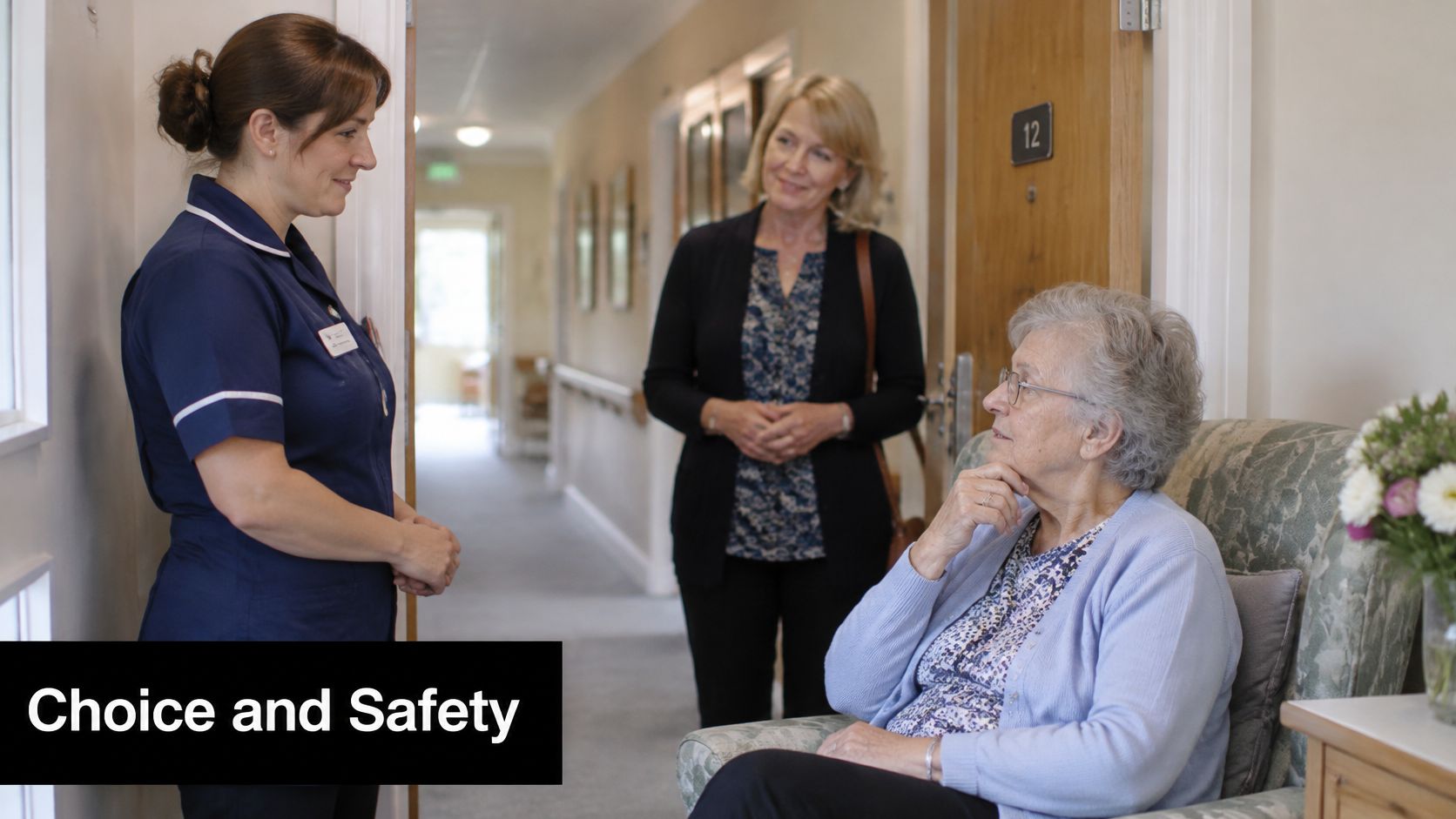
Support the person to make a decision they can understand. Explain the options plainly, try again at a time when they feel settled, and consider a less restrictive alternative, such as a wash. Record their wishes in their own words. These are practical ways to promote choice in care without steering the person towards the answer you prefer.
Four Situations You'll Meet
- A person with capacity declines food and wants to stay alone at home: Explain the risks clearly and check they understand them. Offer alternatives, such as smaller meals or a later visit, and record the discussion. If their intake keeps falling, tell your senior. Disagreement alone is not a reason to remove their choice.
- Capacity fluctuates during a time-limited visit: Try again after a drink, pain relief or a quieter moment. Offer a wash instead of a full bath, and record what the person accepts. If the visit length repeatedly prevents safe care, raise this with your senior.
- Family asks to decide for someone who can still decide: Thank the family member, then direct the question to the person and give them time to answer. Record each person's views separately. If pressure from family is overriding the person's voice, escalate it.
- A rushed visit means a preferred bath cannot happen: Explain the situation and offer the best available alternative. Record the unmet preference. If the same choice is missed repeatedly, raise the pattern as a service issue.
CQC mental-health survey data shows 66% of respondents said they were always treated with respect and dignity in 2025, so about a third did not say this always happened.
Respectful care means taking risks seriously while involving the person as far as possible. If a restriction is needed, explain why, consider less restrictive options and revisit the decision when the immediate concern has passed.
Common Pitfalls That Quietly Erode Dignity
Most dignity failures aren't cruelty. They're habits that develop under time pressure, which is why they're worth naming before they become your normal practice.
Routine speed overrides the person's pace. Task lists reward finishing quickly, so washes get shortened and people are dressed before they've chosen anything. Build the person's pace into the plan, and tell your senior when the allocated time makes that impossible.
Talking over or about the person. It's quicker to update a colleague or relative while the person sits beside you in silence. Speak to the person first, summarise what you've agreed with them, and only then involve others with their permission.
Assuming family speaks for the person. A confident relative in the room can pull every question towards them. Direct your question to the person, use their communication aids, and record their answer separately from the family's view.
Childlike language with adults. Words like "sweetheart" or "darling" can sound warm to you and patronising to an adult who didn't choose them. Use the preferred name, an adult tone, and plain words for body parts and continence products.
Exposure in shared spaces. Someone is left uncovered in a corridor, on a hoist or in a wheelchair while you fetch something. Cover them before you move, wait in a private space where you can, and never use a shared area as a holding place mid-task.
Incontinence treated as a problem to fix fast. Rushed changes, sighing, or commenting on smell can cause deep shame. Explain each step, keep the person covered, use neutral language such as "let's freshen up", and offer a choice of product where the plan allows it.
Cultural and religious needs treated as optional extras. Prayer times, food rules, dress, hair care and who may provide intimate care can be central to identity. Record them, plan around them, and ask rather than guess when you're unsure.
Good intentions aren't evidence. Ask whether the person would describe that care as respectful, and let their answer be the check.
Prove Respect and Dignity Skills on Shift and in Training
Dignity is assessed as something observable, not as a value you claim to hold. The Care Quality Commission's 'Caring' key question examines whether people are treated with compassion, kindness, dignity and respect and whether they are involved as partners in decisions about their care. One published CQC assessment recorded a score of 75 out of 100 for the caring area, while noting that the service had improved from 'requires improvement' to 'good'.
That's one service's result, not a national average, but it shows the point. A technically completed task isn't enough if it ignores consent, privacy, preferences or the person's voice.
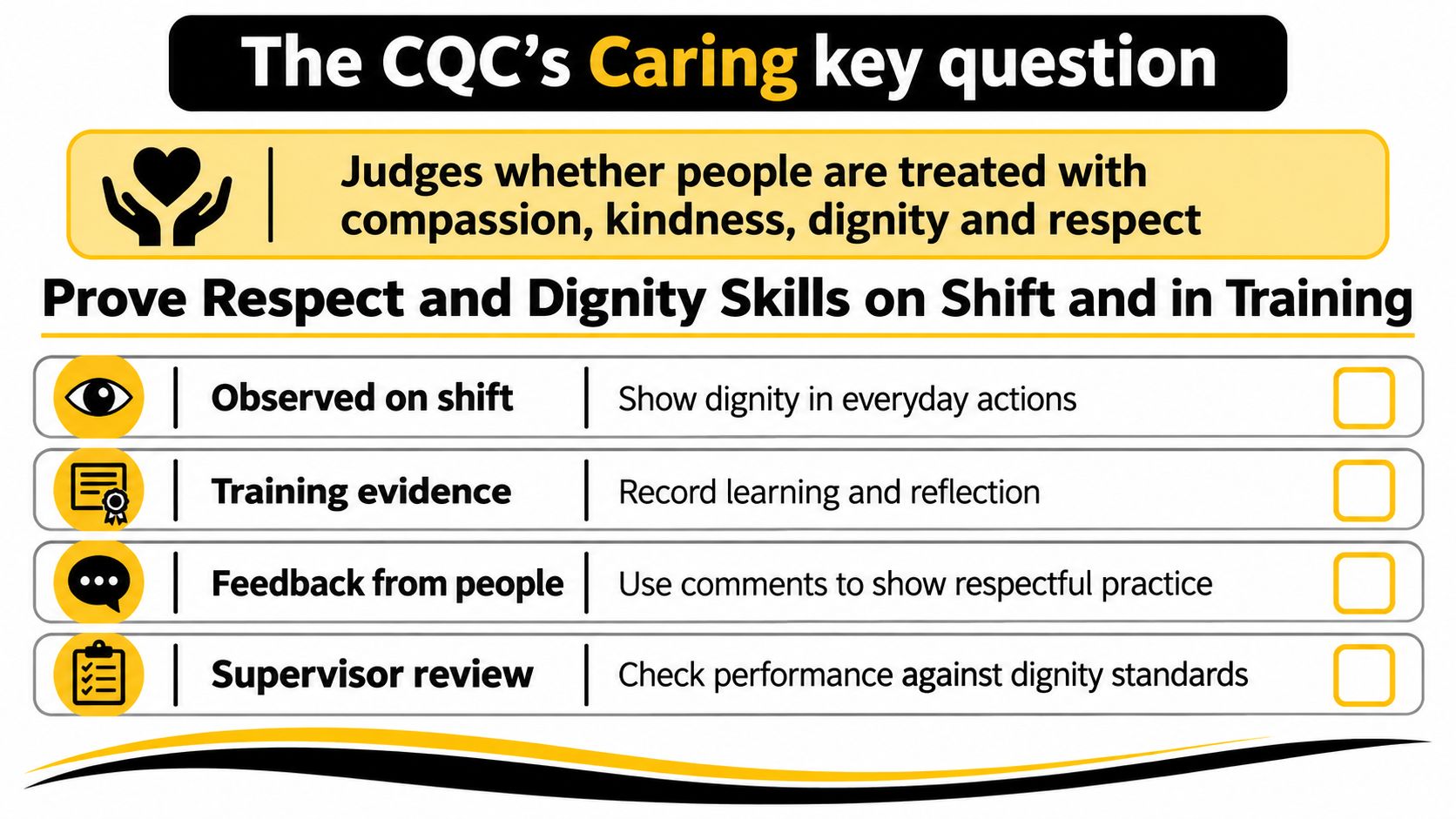
Evidence That Shows Respect and Dignity Competence
| Evidence | What it shows | Example |
|---|---|---|
| Direct observation | Privacy and respect followed without prompting | Senior watches you complete personal care |
| Care Certificate assessment | Competence against the privacy and dignity standard | Completed workbook and witness statement |
| Reflective account | Your thinking about a difficult interaction | Written review of a refusal and what you changed |
| Care-record audit | Preferences recorded and acted on | Care plan updated after a new request |
| Feedback from the person or family | How the person experienced your care | Comment recorded in the file |
| Role-play in training | Practice of hard conversations | Declined-care scenario assessed by a trainer |
Notice the mix. Observation shows what you do unprompted, records show whether preferences were acted on, and feedback shows how the care felt. Self-report on its own proves very little, so collect more than one type.
Training builds the underlying knowledge first. Our Privacy & Dignity course covers confidentiality, personal space, choice, and respectful practice, which gives you the language and reasoning you'll need in an observation or reflective account. Employers remain responsible for workplace competency sign-off, so course completion supports your evidence but doesn't replace a senior seeing you work.
Start small this week. 1. Choose one behaviour from this guide. 2. Practise it on your next shift and record what you did. 3. Ask a senior to observe it and note the outcome in your training file.
If you're building evidence for your Care Certificate or refreshing mandatory training, Cura Academy offers structured courses for care workers, support workers and agency staff, including training on privacy and dignity in care. Visit us to choose the course or bundle that fits your role, complete your learning in one place, and take clear evidence back to your employer for sign-off.