

You've been offered an agency shift, but the recruiter needs your DBS details before they can confirm it. You've already completed a check for another care role, so applying again feels unnecessary. The important question is whether that certificate is eligible for the DBS Update Service, whether you joined in time, and whether the new employer can use it for the same type and level of work.
For busy care workers, getting this right can make onboarding more straightforward. This guide explains how to join DBS Update Service, what to prepare, how the online registration works, and what you'll need to manage afterwards.
Table of Contents
- Why the DBS Update Service Matters for Care Workers
- Gathering Your Details Before You Register
- A Walkthrough of the Online Application
- Keeping Your Certificate Live for Employers
- Staying Compliant and Ready for Shifts with Cura Academy
- Your Next Step to a More Flexible Care Career
Why the DBS Update Service Matters for Care Workers
The DBS Update Service is an annual subscription linked to an individual's Standard or Enhanced DBS certificate. Once you're subscribed, an employer can check the certificate's status online rather than automatically starting another application. The official digital and online services guidance confirms that the service is for Standard and Enhanced checks only, not Basic checks, and that employers can carry out free, instant checks.
That distinction matters in care. A Basic DBS check isn't eligible, so joining the service won't turn a Basic certificate into a portable one. If your role involves regulated care work and your employer arranged a Standard or Enhanced check, you may be able to use the Update Service when moving between suitable roles.

What portability means in practice
The service doesn't give every employer automatic access to your certificate. You'll need to give consent for a status check, and the employer must confirm that the existing check is suitable for the proposed role. The level and type of check need to match the new position.
For an agency worker, that can remove one avoidable delay. Instead of waiting for a fresh certificate whenever you change assignments, you can provide your existing certificate and allow the agency to complete its verification process. You can learn more about obtaining the underlying check in this guide to how to get a DBS check.
The service belongs to you, not to a care agency, care home, or training provider. Keep your certificate details and account information under your own control so you can use them when your employment changes.
Gathering Your Details Before You Register
Registration is easier when you treat it as a short compliance checklist rather than something to complete between shifts. You'll need the correct DBS reference information, accurate personal details, and access to a payment method if you're a paid applicant.
The DBS says you can start with either a DBS application reference number or an issued certificate number, depending on where you are in the process. If the certificate has already arrived, use the details printed on it and check every character carefully.
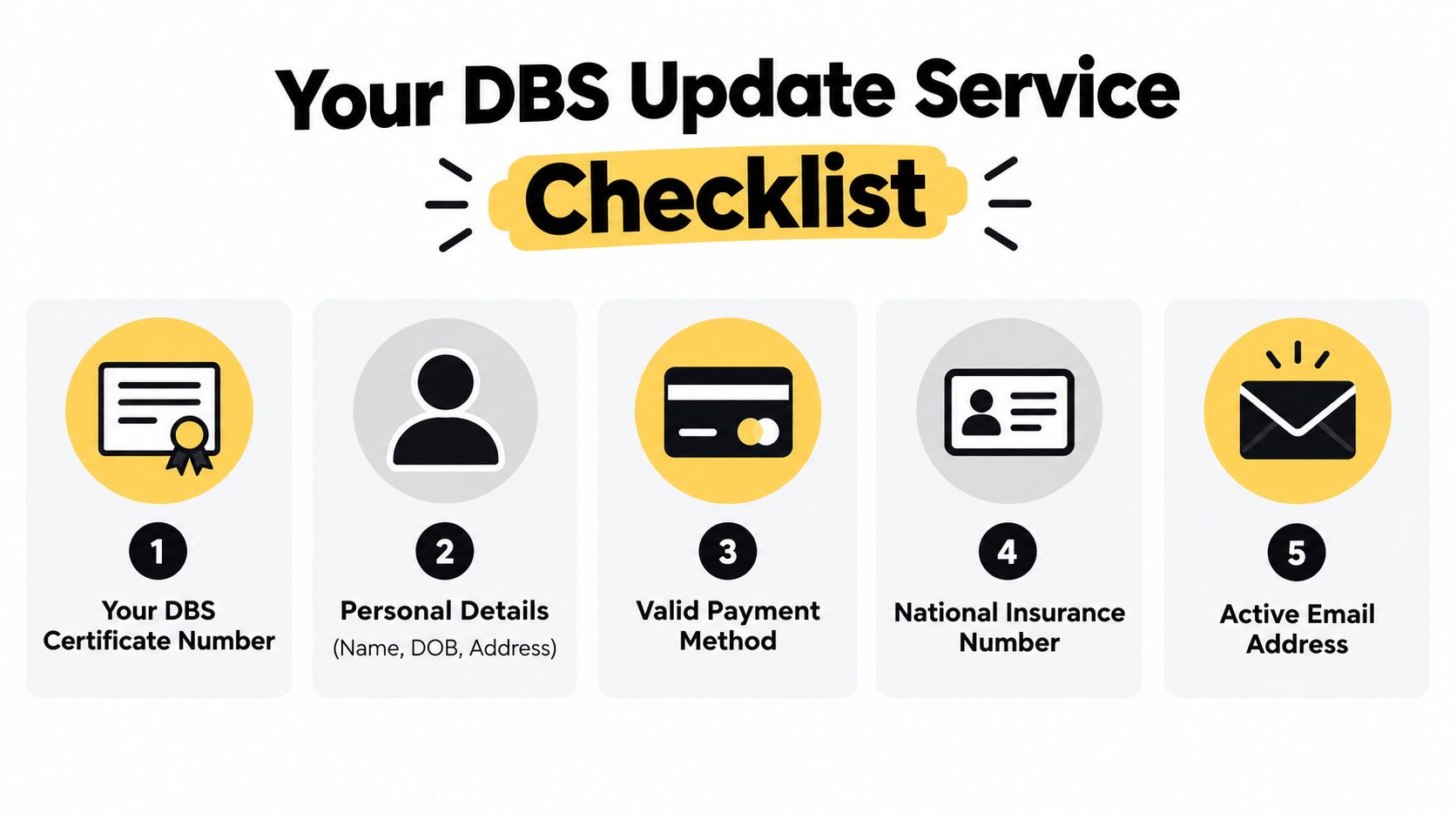
Your pre-registration checklist
Have these details ready before opening the registration page:
- Certificate or application reference: Use the number associated with your Standard or Enhanced DBS process.
- Personal information: Enter your name, date of birth, current address, and other details exactly as requested. If your address history is unclear, review your records first using this practical guide to proof of address in the UK.
- National Insurance number: Keep it available if the form asks for it.
- Personal email address: Use an account you'll continue to access if you leave your current employer.
- Payment method: Paid applicants need a valid way to pay the subscription.
The most common mistake is missing the joining window. You must register within 30 calendar days of the certificate issue date, as stated in the DBS applicant guide for the Update Service.
The annual subscription costs £16, while it's free for volunteers, according to the same official guide. Don't assume an employer will pay or manage the account for you. The applicant should complete and control the subscription personally.
A Walkthrough of the Online Application
Start from the GOV.UK DBS Update Service page, rather than using an unfamiliar third-party registration page. The government service will ask you for the reference information connected with your DBS check, then guide you through the registration screens.
The first checks are about matching you to the correct record. Enter your application reference or certificate number exactly as it appears in your paperwork. A single incorrect character can stop the system matching your details, so don't rely on memory or a hurried photograph of the certificate.
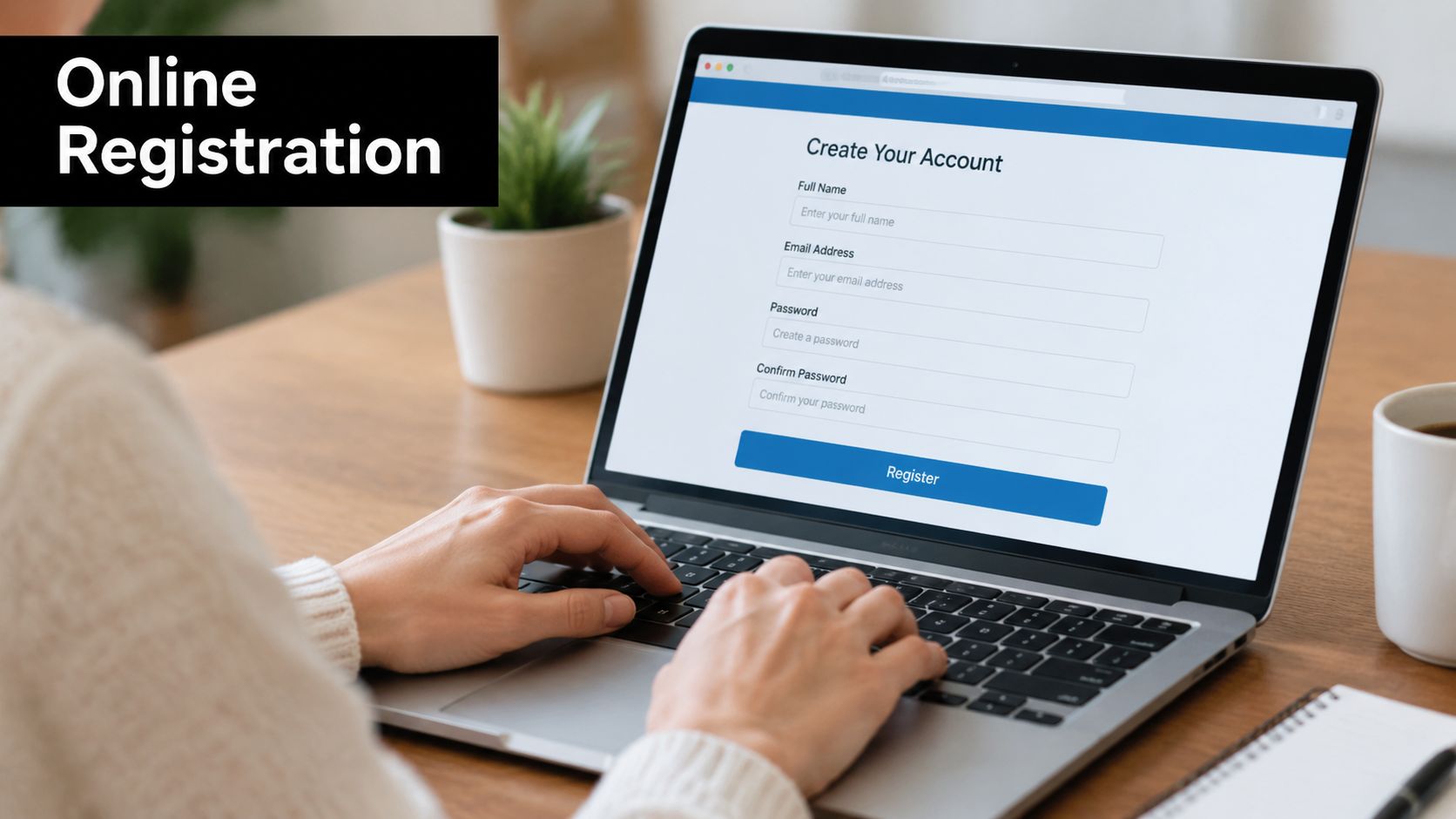
Enter details you can maintain
The form will require personal information that identifies the certificate holder. Use your own legal and contact details, and make sure they align with the information used during the DBS application. If you've recently moved, take extra care with the address fields and retain confirmation of the details you submit.
Use a personal email address, not an agency inbox. Agencies change, contracts end, and access to a work mailbox can disappear without warning. A personal account gives you a stable point of contact for service messages and renewal information.
The account should also remain under your control. DBS guidance warns that third parties shouldn't manage the applicant's subscription account. An employer may help you understand the process, but you should retain the login details, email access, and payment control.
After the system accepts your reference and personal details, review the information before submitting. Check your name spelling, date of birth, certificate or application number, and email address. Correcting an error before registration is far easier than explaining a mismatch to an agency later.
The payment stage applies to paid applicants. Volunteers aren't charged for the subscription, while other applicants pay the annual fee specified in the official guidance. Keep any confirmation email or reference in your personal records, because it can help when an employer asks whether your certificate is registered.
A visual walkthrough can help if you're more comfortable seeing the process before starting:
Registration doesn't replace the employer's safeguarding checks. The agency or care provider still needs to see the original certificate and decide whether its level, workforce type, and role relevance are appropriate.
Keeping Your Certificate Live for Employers
Joining the service only helps if you manage it as part of your ongoing work records. When an agency wants to verify your DBS status, you'll normally need to provide consent and show the original certificate. The employer then uses the service to confirm whether the certificate remains suitable for the role and whether any further action is needed.
The employer's check is free and instant, and the organisation doesn't need to pay a registration fee to perform it, as the official applicant guidance explains. That removes a practical barrier for agencies recruiting care workers quickly, but it doesn't remove your responsibility to keep your account active.
Protect the subscription yourself
Your subscription is connected to your joining date and needs ongoing attention. DBS introduced renewal reminder emails for subscribers from 8 December 2024, sending messages before renewal dates so people can confirm whether they want to remain subscribed, as recorded in the DBS Update Service historical guidance.
Use a personal email address that you check regularly. Keep your payment details current and read renewal messages rather than treating them as routine marketing. If the subscription lapses, you may lose the portability benefit and need to deal with a new DBS application when a future employer requires verification.
A simple personal record can prevent last-minute problems:
- Store the certificate: Keep the original document safely and retain a clear record of its number.
- Record your account email: Make sure you know which personal address controls the subscription.
- Respond to renewal messages: Follow the DBS instructions when renewal reminders arrive.
- Give informed consent: Allow an employer to check the status when the proposed role is suitable.
- Expect employer review: A status check doesn't replace the provider's recruitment and safeguarding decision.
For practical guidance on the employer-side process, use this explanation of how to check DBS Update Service status. The service can speed up verification, but it isn't a universal pass for every care role. A new check may still be required where the role or check requirements differ, or where the status indicates that further information has emerged.
Staying Compliant and Ready for Shifts with Cura Academy
A live DBS is one part of being ready for agency work. Recruiters also need evidence that your training and role-specific knowledge are current. If your DBS details are organised but your mandatory learning records are missing, onboarding can still stall.
Build your readiness around the documents employers commonly request:
- DBS evidence: Keep the certificate available and understand how consent-based status checking works.
- Mandatory care training: Maintain the learning required by the employer or agency.
- Care Certificate preparation: Work through relevant standards where they apply to your route into care.
- Role-specific learning: Add courses that match the settings and people you support.
A training and membership platform can bring those learning records together. Cura Academy provides online access to care training, including Care Certificate standards, mandatory refreshers, and role-specific courses such as Basic Life Support and Dementia Awareness. It also supports learners preparing for Enhanced DBS and Update Service readiness, so the DBS task sits alongside the wider work needed for a complete onboarding profile.
The practical benefit is organisation. You can work through training online, retain evidence of completed learning, and present a clearer compliance profile when an agency asks what you're ready to do. No platform removes the employer's duty to assess your suitability, but better-prepared records make it easier to demonstrate that you're ready for the next stage.
Your Next Step to a More Flexible Care Career
The Update Service is a small administrative commitment with a direct effect on how easily you can move between suitable care roles. Register within the required 30-day period, keep the subscription under your own control, respond to renewal messages, and retain your original certificate.
Then look beyond DBS status. Agencies need a complete picture of your readiness, including relevant training, Care Certificate progress, and evidence that you understand the requirements of frontline care work. Keeping these records organised means fewer avoidable delays when a shift becomes available.
If you've already received a qualifying certificate, check the issue date today and act before the joining window closes. If you're still preparing for care work, organise your DBS information and training records together so you're ready to respond when an employer contacts you.
Cura Academy offers online care training, Care Certificate standards, mandatory refreshers, and role-specific courses to help you build a clearer job-ready profile alongside your DBS preparation. Visit Cura Academy to organise your learning and take the next practical step towards securing care shifts with confidence.