

The eight core domiciliary care worker responsibilities are personal care, medication support, nutrition, home safety, health monitoring, safeguarding, communication, and accurate record keeping. In England's domiciliary care sector, 505,000 direct care-providing filled posts were estimated in 2023/24, alongside 46,000 managerial posts, 1,700 regulated professionals, and 28,000 other filled posts, according to Skills for Care's domiciliary care workforce summary.
A domiciliary care visit combines hands-on support, observation, communication, and accountability in someone's own home. The worker might help a person wash, prepare lunch, notice a change in mobility, report a safeguarding concern, and complete a digital care record during the same shift.
The care plan, employer procedures, training, and escalation route determine what a worker may safely do. A care worker should support and report, not diagnose, investigate allegations, or carry out a task beyond their competence or authorisation. UK role descriptions commonly include personal care, everyday-life support, meal preparation, medication assistance, housekeeping, shopping, companionship, wellbeing monitoring, and reporting changes in condition, as shown in NHS Jobs' domiciliary care worker duties and the GOV.UK care and support worker category.
Each responsibility below connects a realistic home-visit scenario with practical action, common risks, compliance expectations, and preparation that can be supported through Cura Academy.
Table of Contents
- 1. Personal Care and Activities of Daily Living Assistance
- 2. Medication Support and Administration Awareness
- 3. Meal Preparation and Nutrition Support
- 4. Home Safety, Cleaning, and Environmental Management
- 5. Monitoring Health and Recognising Changes
- 6. Safeguarding, Recognising Abuse, and Duty to Report
- 7. Communication, Emotional Support, and Companionship
- 8. Record Keeping, Documentation, and Information Sharing
- 8-Point Comparison of Domiciliary Care Responsibilities
- Turn Core Duties Into Job-Ready Practice
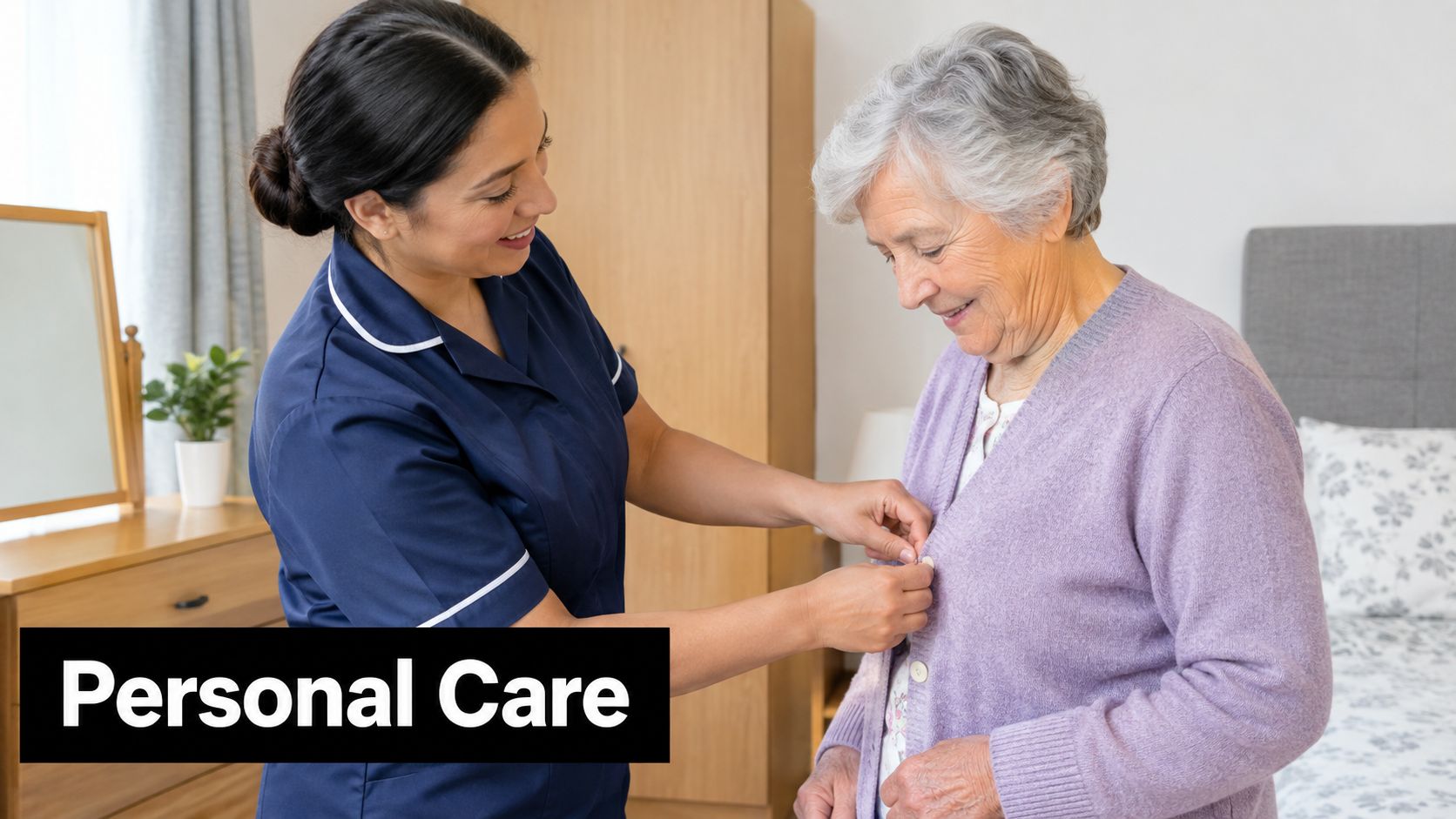
1. Personal Care and Activities of Daily Living Assistance
Personal care requires technical support and professional judgement. Bathing, dressing, toileting, continence care, grooming, oral hygiene, and mobility assistance must follow the person's care plan while protecting dignity, privacy, choice, and independence.
During a morning visit with an older person who has limited mobility, begin by checking the care plan and explaining each step. Ask what the person wants to do independently, prepare clothing and equipment, and support the agreed shower or washing routine. If they can wash their face or choose their clothes, allow enough time for that participation rather than taking over to finish sooner.
Practical rule: The care plan sets out the support required, while the person guides how it is delivered wherever the approach remains safe.
Manual handling sets clear limits. Use an agreed hoist, transfer aid, walking frame, or other equipment only after receiving relevant training and confirming that the care plan explains the procedure. Do not improvise a transfer, lift someone manually to save time, or continue if pain, weakness, or another change makes the planned method unsafe.
Before providing this support, complete relevant Manual Handling and Health and Safety training through Cura Academy, then confirm your employer's practical competency assessment and local procedures. Training supports safe technique, but it does not authorise tasks outside your assessed competence.
Throughout the visit, explain what you are doing, protect confidentiality, and respect cultural and personal preferences. Record and report pain, skin changes, reduced mobility, or a new need for equipment through the agreed route. A care worker observes and assists. They do not diagnose an injury, decide on treatment, or redesign the care plan independently.
2. Medication Support and Administration Awareness
Medication support can mean a reminder, assistance locating prescribed medicines, help opening packaging where authorised, or recording what support was provided. It doesn't automatically mean giving the medicine. The distinction matters because the worker's responsibility depends on the care plan, the medicine, employer policy, training, and formal authorisation.
Suppose a person living with dementia forgets their morning blood pressure medicine. The worker checks the agreed medication instructions, offers the reminder in a calm way, and records the response according to the employer's system. If the person refuses, can't find the medicine, vomits after taking it, or reports a new reaction, the worker should follow the escalation process rather than deciding independently what to do next.
Direct administration must never be assumed. A standard care worker shouldn't administer medication unless the employer has confirmed that the worker is trained, competent, and authorised for that specific task. Even when administration is permitted, the worker must follow the applicable medication record, identity checks, timing requirements, storage arrangements, and error-reporting procedure.
What safe medication support looks like
- Read the care plan: Confirm whether the task is prompting, assisting, or administration, and check for specific instructions.
- Keep records promptly: Document the support given, refusal, omission, or concern using the required paper or digital record.
- Escalate changes: Report unusual symptoms, suspected side effects, missed doses, medication errors, or a change in the person's ability to manage medicines.
- Protect storage: Keep medicines secure and follow instructions concerning children, pets, heat, moisture, and access.
For a focused review of consent, refusal, and other safeguards, read Cura Academy's guide to the rights of medication administration. The key boundary is simple: notice, support, record, and report. Don't alter doses, crush tablets, substitute medicines, or offer clinical advice unless the care plan and your authorisation explicitly permit the action.
3. Meal Preparation and Nutrition Support
A meal visit involves more than putting food on a plate. The worker may need to check the care plan for allergies, cultural preferences, texture requirements, fluid guidance, diabetes-related instructions, or assistance with eating. The person should remain involved in choosing meals wherever possible, because nutrition is tied to enjoyment, routine, dignity, and independence.
A realistic example is a client recovering from a stroke who has reduced grip strength. The worker might prepare a suitable meal, position adapted utensils as specified, check that the person is comfortable, and provide the level of assistance agreed in the plan. They should never introduce a texture-modified diet or make a clinical judgement about swallowing without appropriate instruction from the relevant professional and clear care-plan guidance.
Food hygiene is part of safe care. Wash hands, clean work surfaces, use suitable utensils, separate raw and ready-to-eat foods, follow storage instructions, and check the home's equipment before cooking. If the cooker is unsafe, the fridge isn't working, or food appears spoiled, stop and report the hazard instead of taking an avoidable risk. Cura Academy's guidance on hazards in the kitchen can help learners recognise common domestic risks.
Support without taking over
Meal preparation should preserve choice. Offer options, involve the person in planning, and adapt the pace to their needs. A worker can make mealtimes social by sitting nearby and encouraging conversation, but shouldn't pressure someone to eat or drink.
Record relevant information in the required format, such as what was prepared, how much was eaten, fluid intake where monitoring is part of the plan, and any difficulty chewing, swallowing, or using utensils. A reduced appetite, repeated refusal, coughing during meals, or a new inability to prepare food should be reported promptly. The worker describes what happened and seeks guidance. They don't diagnose malnutrition, dehydration, diabetes complications, or dysphagia.

4. Home Safety, Cleaning, and Environmental Management
Home support sits close to the boundary between care work and domestic work. Cleaning, laundry, tidying, shopping, and other household tasks may appear in a care package, but the worker should check exactly what the plan includes and whose needs the task serves. Cleaning the area needed for safe personal care is different from accepting every household chore requested by relatives.
During a visit, an older person's loose rug is creating a trip risk near the bathroom. The worker can make the immediate area safer if that action is within the agreed support, then report the hazard to the coordinator. They shouldn't move heavy furniture, repair flooring, climb unsafely, or use unfamiliar chemicals without the right equipment and instruction.
Environmental checks should be observational and proportionate. Look for poor lighting, blocked walkways, spills, unsafe cables, damp or mould, pests, unsuitable temperatures, and equipment that appears damaged. Respect the person's preferences about how their home is arranged, but don't ignore a serious risk because it has become familiar.
- Follow the plan: Complete only the household duties that are authorised and connected to the person's care or wellbeing.
- Use products safely: Read labels, ventilate where required, avoid mixing chemicals, and store products securely.
- Protect your body: Don't overreach, carry excessive loads, or perform an unsafe task because a visit is running late.
- Report and record: Document accidents, near misses, hazards, and actions taken through the employer's process.
Infection prevention applies to ordinary domestic routines too. Hand hygiene, appropriate cleaning, safe handling of laundry, and correct disposal of waste reduce avoidable exposure. Cura Academy's resource on infection control in care provides relevant preparation, but employer procedures and the individual care plan remain the working authority.
5. Monitoring Health and Recognising Changes
A domiciliary care worker may be the person who notices that something has changed before anyone else does. The worker sees the client in their usual environment and can compare today's presentation with the person's established baseline. That makes observation and reporting central responsibilities, even though the worker isn't diagnosing or prescribing.
For example, a client who is usually alert becomes unusually confused, unsteady, or withdrawn. The worker records what they can see and hear, asks simple questions if appropriate, checks whether there has been a fall or another immediate danger, and contacts the supervisor or emergency service according to the escalation procedure. The worker shouldn't label the change as a urinary infection, low blood sugar, stroke, or medication reaction without clinical authority.
Describe the change, not your theory
Useful reporting is specific. Note the time, what the person was doing, what was different from normal, what the person said, visible signs, any immediate action, and who was contacted. “Client seemed off” gives the next professional little to work with. “Client was more unsteady than during the previous visit, needed support to stand, and reported new dizziness” is an observable account, provided it accurately reflects what happened.
Changes can involve physical health, mood, cognition, behaviour, appetite, continence, sleep, pain, skin condition, breathing, or ability to complete familiar activities. A pattern of falls or increasing difficulty using a walking aid may require review of mobility support or home equipment.
Escalation is part of care, not an admission that you've failed.
Know the employer's contacts before the first solo visit. Depending on the concern, the route may involve a care coordinator, supervisor, community nurse, GP, urgent service, or emergency services. If someone is in immediate danger, follow emergency procedures. Complete training that supports recognition of common risks, including falls, infection, stroke, sepsis, dementia-related changes, and mental health deterioration. Training improves recognition, but it never replaces the care plan, supervision, or professional assessment.
6. Safeguarding, Recognising Abuse, and Duty to Report
Safeguarding is a direct responsibility during every home visit. In a private home, a worker may notice bruising, fear, neglect, controlling behaviour, or unusual control of money involving family members, visitors, or others. Abuse may be physical, emotional, sexual, financial, discriminatory, or domestic. Coercive control and neglect also require attention. Your role is to recognise concerns, protect immediate safety, record facts, and report through the correct route. Investigation and confrontation belong to authorised professionals.
A client may have bruising they cannot explain, while a relative speaks harshly and controls their access to money. Stay calm, use open and limited questions, and give the person space to speak when it is safe. Do not promise secrecy. Explain that the concern must be shared with someone who can provide help, unless telling the person present would increase risk.
A factual safeguarding response
Record the client's words accurately. Use quotation marks only for exact words, then describe visible injuries, behaviour, location, date, time, people present, and actions taken. Avoid conclusions such as “the son is financially abusing her” unless an authorised investigation has established that finding. State what you observed or what the person disclosed, and pass it through the safeguarding process without delay.
- If there's immediate danger: Follow emergency procedures and seek urgent assistance.
- If the concern is serious but not immediate: Contact the supervisor, designated safeguarding lead, or local route specified by your employer.
- If the alleged person is present: Do not confront them or discuss the report in a way that could increase risk to the client or you.
- If the client discloses abuse: Listen, acknowledge what they have said, and report promptly.
Safeguarding training should be completed before independent work and refreshed according to employer requirements. Cura Academy's safeguarding training supports foundational learning, but local procedures, supervision, and the provider's reporting policy still govern action. Accurate escalation protects the person and creates an accountable record. Workers should know the reporting contacts before their first solo visit, not search for them during a crisis.
7. Communication, Emotional Support, and Companionship
Companionship isn't an optional extra added after the “real” care is complete. Conversation, reassurance, encouragement, and respectful attention can help a person take part in daily routines and express concerns that might otherwise remain hidden. The worker still needs to manage time carefully, but rushing every interaction can undermine person-centred care and reduce the quality of information shared.
At lunchtime, a worker might sit with a client who enjoys discussing gardening and family history. The practical task is serving the meal, but the interaction also gives the person a chance to express anxiety, pain, loneliness, or a wish to change their routine. Active listening means allowing pauses, checking understanding, and responding to the person rather than steering every conversation back to the task list.
Communication must adapt to the individual. A person with hearing loss may need the worker to face them and reduce background noise. Someone with dementia may respond better to short, clear explanations and one instruction at a time. A person with speech difficulty may need extra time, written prompts, pictures, or an agreed communication aid. Never assume that slow speech or cognitive impairment means the person can't make choices.
Warmth with professional boundaries
Be friendly without becoming a family member, therapist, financial adviser, or personal friend. Don't borrow money, accept inappropriate gifts, share private contact details, make promises about availability, or discuss other clients. Confidentiality applies during casual conversation as much as during formal care.
Encourage activities the person has chosen, such as music, crafts, puzzles, gardening, or reminiscence. If someone expresses hopelessness, severe anxiety, or thoughts of self-harm, take the statement seriously and follow the escalation route immediately. The worker offers calm support and reports the concern. They don't provide counselling, diagnose depression, or guarantee that everything will be fine.

8. Record Keeping, Documentation, and Information Sharing
Good records turn an individual visit into reliable continuity of care. A domiciliary care worker may record personal care delivered, food and fluids, medication support, mobility, mood, incidents, refusals, changes in condition, safeguarding concerns, and the person's preferences. The exact fields depend on the employer's system, but the standard remains the same: accurate, timely, relevant, and confidential.
A fall is a useful example. The record should state the date and time, where the fall occurred, what the worker saw, what the person reported, any visible injury or pain, immediate safety action, who was contacted, and the advice received. It shouldn't speculate about why the fall happened or blame the person. If the worker didn't witness the fall, the record must say so.
Digital systems now shape routine care delivery. The 2025 adult social care provider technology survey found that 73% of providers used digital social care records, 63% used digital rostering, 53% used electronic medicines administration records, and 51% used HR management systems. Only 27% reported using no care technologies, while adoption of digital social care records among CQC-registered providers rose from 41% in December 2021 to 80% by July 2025, according to the same source.
A defensible care note
- Record promptly: Complete the entry as soon as practical while details remain clear.
- Use observable language: Write what you saw, heard, measured where authorised, or were told.
- Identify accountability: Include the required date, time, name, and signature or digital authentication.
- Share appropriately: Send information only through approved systems to people who need it for care or safety.
- Report separately when needed: An incident, accident, medication error, or safeguarding concern may require an additional form or immediate phone call.
Never photograph records on a personal phone, post about a client online, or discuss private information with unauthorised people. Digital records are convenient, not casual. A care worker should know the provider's confidentiality, data protection, correction, access, and incident-reporting procedures before using the system independently.
8-Point Comparison of Domiciliary Care Responsibilities
| Responsibility | 🔄 Complexity | ⚡ Resources | 📊 Expected outcomes | 💡 Ideal use cases | ⭐ Key advantages |
|---|---|---|---|---|---|
| Personal Care and Activities of Daily Living (ADL) Assistance | High, hands‑on tasks, manual‑handling skill required | Assistive equipment (hoists, rails), training, time | Maintains hygiene, dignity, independence; reduces care home admissions | Daily personal care needs, post‑op recovery, limited mobility | Direct, high‑impact care; strong client relationships |
| Medication Support and Administration Awareness | Moderate, procedural, high attention to detail | Medicines awareness training, clear protocols, record systems | Improved adherence and safety; fewer medication errors | Clients on multiple meds, cognitive impairment, supervised regimes | Prevents errors and adverse events; enhances safety |
| Meal Preparation and Nutrition Support | Moderate, dietary adaptation and food‑safety knowledge | Shopping time, food supplies, food‑safety training | Better nutrition, recovery support, reduced malnutrition risk | Diabetes, swallowing/texture needs, dietary restrictions | Supports health and independence through tailored meals |
| Home Safety, Cleaning, and Environmental Management | Moderate, physical work plus hazard recognition | Cleaning supplies, PPE, training in safety and infection control | Fewer falls/infections; safer living environment | Homes with clutter, mobility aids, infection risk | Preventive impact on accidents and hospitalisation |
| Monitoring Health and Recognizing Changes | Moderate–High, observational judgement and escalation | Training (BLS, conditions awareness), time for regular checks, documentation | Early detection of deterioration; timely medical intervention | Frailty, chronic conditions, recent illness or medication changes | Enables proactive care and reduced emergency admissions |
| Safeguarding, Recognizing Abuse, and Duty to Report | High, sensitive, legal and ethical responsibility | Mandatory safeguarding training, clear reporting channels | Protection from harm; legal compliance and prompt interventions | Vulnerable adults, suspected abuse or neglect situations | Prevents abuse escalation; legally protects service users and staff |
| Communication, Emotional Support, and Companionship | Low–Moderate, interpersonal skill emphasis | Time, dementia/communication training, patience | Reduced loneliness, improved wellbeing and cooperation with care | Socially isolated clients, dementia, mental health needs | Enhances trust, adherence and quality of life |
| Record Keeping, Documentation, and Information Sharing | Moderate, accuracy and confidentiality required | Time, digital/paper systems, GDPR/confidentiality training | Continuity of care, evidence for decisions, regulatory compliance | Multi‑carer teams, complex care plans, incident tracking | Protects staff and supports coordinated, safe care |
Turn Core Duties Into Job-Ready Practice
Safe domiciliary care depends on combining person-centred support with observation, boundaries, escalation, and secure documentation. A worker can complete every visible task on a visit and still provide unsafe care if they ignore a new symptom, act outside the care plan, fail to report a concern, or write a vague record that leaves the next worker guessing.
The sector's scale makes consistency important. Skills for Care estimated 515,000 direct care-providing filled posts in CQC non-residential services in 2025, alongside 48,000 managers and 27,000 other filled posts, as reported in the 2025 domiciliary care workforce summary. That level of home-care deployment means each worker needs a dependable method for completing visits, handing over information, following rotas, and meeting compliance expectations.
Use this readiness check before accepting independent shifts:
- Review the care plan: Know the person's preferences, risks, equipment, medication instructions, dietary needs, communication approach, and escalation contacts.
- Confirm task boundaries: Ask whether you're expected to prompt, assist, administer, monitor, clean, transfer, or report. If you aren't trained or authorised, stop and seek guidance.
- Complete core preparation: Work through relevant Care Certificate standards and role-specific training, including safeguarding, moving and handling, infection prevention, medication awareness, food hygiene, basic life support, and dementia awareness where applicable.
- Know the escalation route: Save the supervisor or coordinator's contact details and understand what requires an urgent call, an incident report, a safeguarding referral, or emergency assistance.
- Record every visit accurately: Document care delivered, refusals, changes, incidents, and actions through the provider's approved system.
Cura Academy offers online access to Care Certificate standards, mandatory refreshers, Basic Life Support, Dementia Awareness, and other role-specific care learning. It can help organise foundational preparation and keep training evidence together, but it isn't a substitute for employer induction, supervised practice, competency checks, or authorisation for specialist tasks.
Treat the eight domiciliary care worker responsibilities as connected rather than separate. Personal care gives you an opportunity to observe. Meal preparation reveals appetite and swallowing difficulties. Conversation may uncover distress or abuse. Accurate records allow the wider team to act. The strongest workers combine kindness with disciplined reporting, and confidence with the humility to say, “This is outside my training, so I need help.”
Use Cura Academy to work through Care Certificate standards, mandatory refreshers, and role-specific courses that support safe, person-centred domiciliary care. Visit Cura Academy to organise your training pathway and prepare for employer induction and compliance checks.