
Care Certificate training cost in 2026 usually sits around £10 a month for subscription access, £20 to £75 for one-off online courses, and up to £1,540+ for funded Level 2 routes where eligibility applies. The catch is simple, the sticker price is rarely the whole bill.
You're probably trying to get someone shift-ready without wasting money on a course that looks cheap but drags out, needs paid marking, or leaves you paying again for compliance and certification. That's the actual game here, not the headline price.
Table of Contents
- What the Care Certificate Costs in 2026
- Subscription, One-Off, and Bundle Pricing Models
- What the Headline Price Does Not Include
- DBS, Update Service, and Compliance Add-Ons
- Government Funding and Reimbursement Routes
- Why the Cheapest Course Often Costs the Most
- How to Choose the Right Option for Your Situation
- Key Takeaways and Questions to Ask Any Provider
What the Care Certificate Costs in 2026
A new carer can appear ready for work after paying for online access, yet the employer may still face assessment, marking, certification, and compliance costs. That is why care certificate training cost should be measured from enrolment to rota-ready status, not from the first price shown.
The headline fee is only one line item
Self-funded online courses commonly range from £20 to £75, while eligible funded Level 2 routes can reach £1,540+, as shown in current UK listings and funding guidance and the Adult Social Care Learning and Development Support Scheme guidance. The difference reflects what each route includes. The Care Certificate standards do not change because the provider uses a different pricing model.
A job-seeker paying £30 may still need to budget for marking, assessment, certification, or a failed attempt. For a small domiciliary agency, the relevant figure is the cost of making a worker compliant and available for shifts.
Ask every provider for the total cost to completion in writing.
| Care Certificate Training Ranges in 2026 | Headline Price | Typical All-In Cost |
|---|---|---|
| Subscription access | About £10 per month, as shown in this Care Certificate access and onboarding pricing explanation | Higher if completion takes longer, lower if the learner finishes promptly |
| One-off online course | £20 to £75 | Often higher once marking, re-sits, and certification are added |
| Funded Level 2 route | Up to £1,540+ reimbursable where eligible | Usually paid by the employer first, then reclaimed |
The cheapest course can cost more if it creates delays, requires paid re-sits, or leaves the employer buying missing compliance items separately. Check whether assessment, tutor support, certificate issue, and evidence review sit inside the quoted fee. This kind of pricing logic is why some providers package Care Certificate access as a broader onboarding route, rather than selling a bare course shell.
Subscription, One-Off, and Bundle Pricing Models
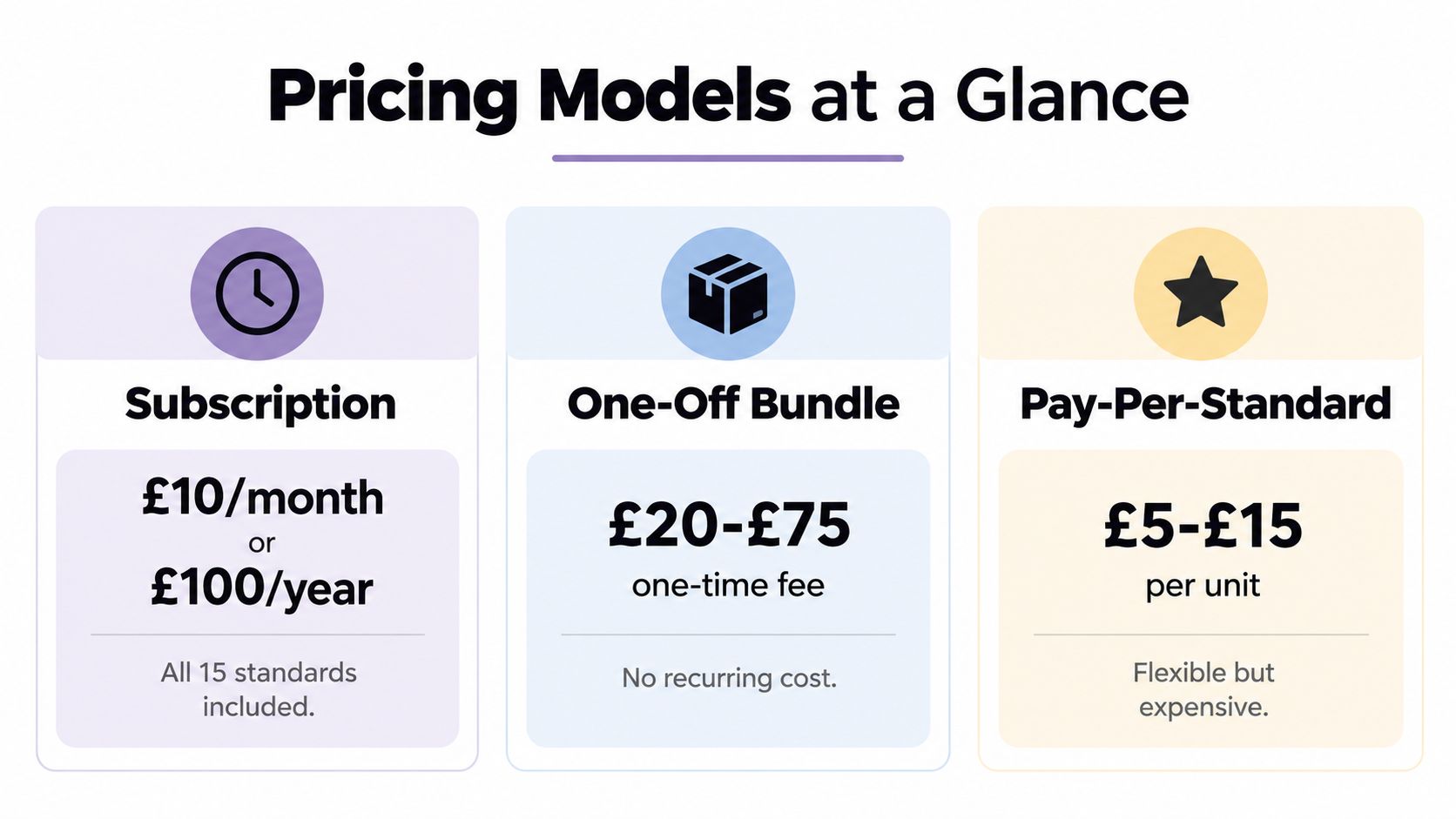
The market splits into three clear models, and each one suits a different buyer. If you don't match the model to the learner, you end up paying for time, access, or administration you didn't need.
Subscription works when the learner is active
A monthly subscription is the cleanest option for someone who's already working through induction and wants steady support. It's also the easiest model to approve for a learner who expects to use refresher modules, support, and certificate access without buying each element separately.
A six-month subscription at £10 a month can total £60, which is no longer miles apart from a one-off bundle. That matters because completion risk changes the maths, if someone starts strong and then stalls, the cost climbs with time.
One-off bundles suit one clear objective
One-off online bundles usually sit between £20 and £75. They're the right call when the learner wants one transaction, one login, and no recurring bill on a card.
That said, a bundle only stays cheap if it includes what the buyer assumes it includes. If the workbook, marking, or certificate are separate, the model stops being simple and starts being misleading.
Bulk licences reward employer buying power
Employer packages can drive the per-learner cost down sharply when there are multiple new starters. The trade-off is that the admin burden shifts to the employer, who now has to track completion, chasing, and evidence.
If you're onboarding a team, the cheapest route on paper often isn't the best route in practice. Bulk buying makes sense when you've got enough learners to absorb the licence model and enough admin capacity to manage it properly.
What the Headline Price Does Not Include
The quoted course fee often covers only the learning content. That's the first mistake buyers make, and it's why the same course can look cheap until the add-ons start appearing.
Hidden costs change the real price fast
The most common extras are workbook marking, re-sits, certificate issue, and practical observation if the provider separates knowledge from competency sign-off. A low sticker price becomes poor value if each standard is priced separately and the learner needs the full pathway.
A cheap course is only cheap if it gets someone across the line without extra admin charges.
| Hidden Cost Item | Typical 2026 Price | Who Usually Pays |
|---|---|---|
| Workbook marking | £10 to £25 per standard | Learner or employer, depending on provider |
| Replacement certificate | £15 to £30 | Usually the learner |
| Re-sit fee | £10 to £20 | Usually the learner |
| Trainer observation visit | £40 to £60 per day | Usually the employer |
Some providers unbundle aggressively, which can push a £25 course into a much higher total once every standard is charged separately. Others price more cleanly and include the assessment path in one figure, which is easier for employers to budget against.
The key test is blunt. Before paying, ask whether the quoted price includes tutor-marked workbooks, the e-certificate, and at least one re-sit. If the answer is fuzzy, the quote is incomplete.
DBS, Update Service, and Compliance Add-Ons
The training fee is only one line in the onboarding bill. For care work, the compliance stack starts as soon as the learner is being checked for placement, and that's where the hidden cost starts to bite.
Compliance is a separate budget line
An enhanced DBS check costs £38.00 for most roles and £58.00 for adult social care workforce roles, with the DBS Update Service at £13.00 a year per current pricing guidance. Those costs are not part of a Care Certificate course fee, and self-funded learners often pay them separately.
Add in occupational health clearance, right-to-work checks, uniform or PPE deposits, and ID verification, and onboarding can quickly grow by £40 to £120. None of that is glamorous, but every agency and care home knows it's real.
| Care Certificate compliance add-on costs in 2026 | Typical fee | Who pays | Frequency |
|---|---|---|---|
| Enhanced DBS check | £38.00 or £58.00 | Learner or employer | Usually once per role change, sometimes repeated |
| DBS Update Service | £13.00 | Usually the learner if self-funded, otherwise employer policy varies | Annual |
| Occupational health clearance | Varies | Employer or learner | Usually once per onboarding cycle |
| Right-to-work checks | Varies | Employer | Per onboarding event |
| ID verification | Varies | Employer or learner | Usually once |
| Uniform or PPE deposit | Varies | Employer or learner | Usually upfront |
A proper complete HR compliance guide is worth reading if you're budgeting for onboarding across multiple hires, because the Care Certificate is only one piece of the wider compliance picture.
Government Funding and Reimbursement Routes
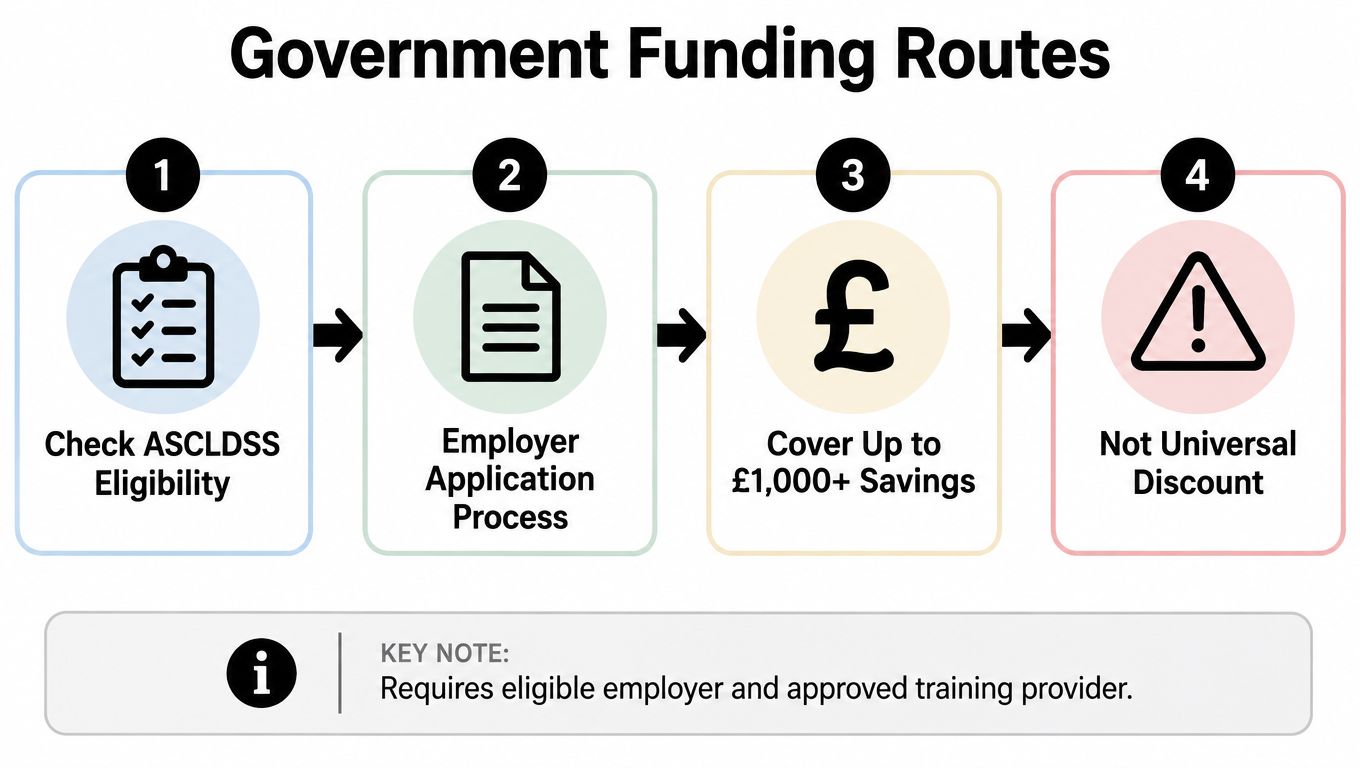
Public funding can reduce the total onboarding bill, but eligible employers usually receive the reimbursement. Learners should not assume the money will be paid directly to them.
The funding route is employer-led
Under the Adult Social Care Learning and Development Support Scheme, eligible training can be reimbursed at up to £1,540 for several Level 2 Adult Social Care Certificate routes. This applies to training paid for between 1 April 2025 and the scheme's current window running to 31 March 2027, subject to confirmation according to the government guidance. The figure compares with £1,500 in the previous period.
Reimbursement is not an instant discount at checkout. The employer normally pays first, keeps the required records, completes the claim, and recovers the eligible amount after the training is completed. Self-funded learners should budget on receiving no direct reimbursement unless the employer confirms a different arrangement in writing.
Apprenticeship levy pathways and Free Courses for Jobs may provide other funding routes, subject to the learner's eligibility, employer arrangements, and local availability. Check the current scheme rules before relying on either option according to the government guidance.
Why the Cheapest Course Often Costs the Most
A carer who pays for a cheap course can still face assessment fees, certification charges, DBS costs, or repeat training before becoming fully ready for work. Compare the complete onboarding route, not just the amount charged for access.
Cheap upfront can mean expensive later
A low-cost course without reliable support may leave the learner paying for a resit, extra marking, or an external competency visit. If the learner drops out of a subscription before finishing, the unused access still has a cost. However, that loss is visible and limited. A failed one-off course can create a second purchase, further delays, and another round of evidence collection.
Include repeat-training risk in the budget. The cheapest option is poor value if it does not take the learner through assessment and certification, or if unclear requirements send them back to training.
A subscription model such as Cura Academy's £10 monthly access gives employers and carers one place for standards, refreshers, support, and certificate-related steps. It does not make every subscription good value. It does make the monthly exposure easier to control when the provider supports completion rather than selling login access alone.
Buy the route, not the headline. A course that finishes the job costs less than a bargain that leaves you restarting.
For team managers, a predictable monthly fee is easier to approve than a low headline price followed by assessment, DBS, resit, and certification charges. Covered shifts matter more than an inexpensive login on day one.
How to Choose the Right Option for Your Situation
Start with three questions. How long are you likely to stay in care, will your employer reimburse you, and do you need the certificate inside two weeks or can you wait for a funded route?
Match the model to the person
A new starter on a zero-hours contract usually needs a one-off course in the £20 to £75 range, because they need something simple, immediate, and easy to pay for. That's especially true if they're trying to get job-ready fast.
A carer working across multiple employers usually does better with subscription access, because refreshers and extra modules matter more than a one-time purchase. If the training follows them from shift to shift, the subscription cost is easier to justify.
A new domiciliary-care employee may be best off on a funded employer route where the organisation reclaims the cost through the Workforce Development Fund model. In that case, the employer should budget for upfront payment and later reimbursement, not expect the learner to carry the bill.
| Learner profile | Best-fit model | Why it fits |
|---|---|---|
| New starter on zero-hours | One-off course | Lowest friction for a quick start |
| Multi-employer carer | Subscription | Ongoing access and refreshers matter |
| Employer onboarding new hires | Bulk or funded route | Lower unit cost and better control |
A useful benchmark is this, total onboarding for self-funded learners often lands around £40 to £100 once certificate, assessment, and DBS-related costs are added. That figure helps you sanity-check a provider's quote before you hand over a deposit.
If you're comparing training providers more broadly, this guide to health and social care training providers is a sensible starting point for filtering out weak options.
Key Takeaways and Questions to Ask Any Provider
Remember three numbers. £10 a month is the kind of subscription price that can suit active learners, £40 to £100 is a realistic self-funded onboarding range once common add-ons are counted, and £1,540+ is the kind of reimbursable Level 2 route available through eligible employer funding.
Use these questions before you pay
- Is the certificate externally quality assured? If not, ask what evidence the employer gets.
- Are re-sits free? A low fee becomes bad value fast if every retry costs extra.
- Are DBS and Update Service included? If not, budget for them separately.
- What proof of completion will the employer receive? A certificate alone may not be enough for compliance.
The smartest buyer doesn't ask for the cheapest course. They ask for the route that gets a carer safely through onboarding with the fewest surprises.
If you want a training route that keeps the pricing clear and the onboarding practical, take a look at Cura Academy. It's built for care workers, agencies, and employers who want Care Certificate access, compliance support, and job-ready training in one place without guessing what's included.